
When Andrew Dundas was diagnosed with ALS at age 53, retirement was still years away. Four years later, he continues to work full-time, but he can no longer go into his office. That shift has cost him both personally and professionally.
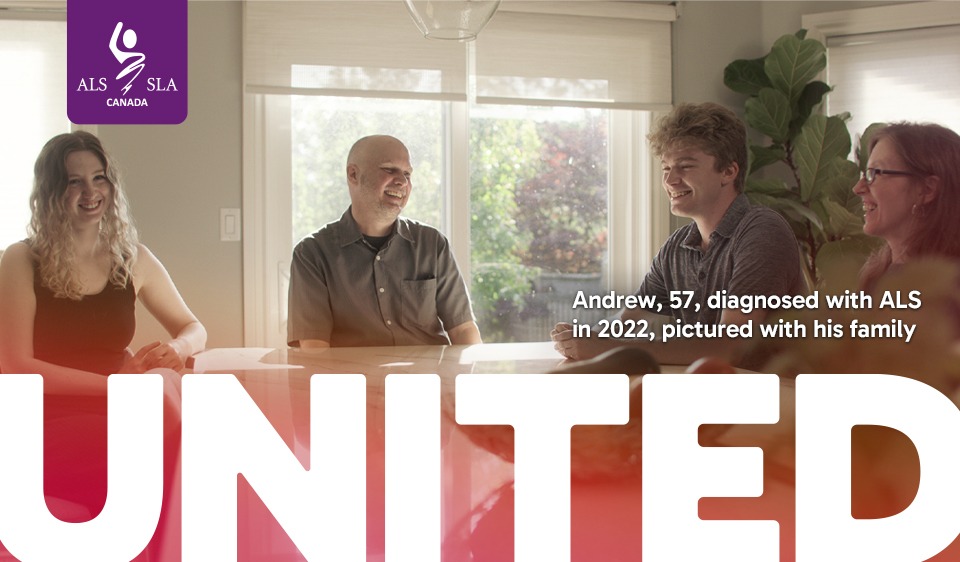
“Working from home reduces my social interaction and ability to connect,” he says. “It also impacts my ability for me to do my job well, at the same level I once did.”
It’s a question many people living with ALS are forced to ask.
In fact, Andrew has been able to remain in the workforce much longer than many other people living with ALS.
An even bigger concern of Andrew’s is how long he can keep working. As his symptoms progress, he knows he’ll have to cut back, and eventually stop altogether. He worries about what will happen after that.
“Will my family be able to push on and survive?”
Our Burden of ALS Study found that more than 25% of people with ALS stop working immediately after receiving a diagnosis. Nearly half stop after six months.
This creates immediate and significant financial strain on families, just as they begin facing steep out-of-pocket costs for specialized equipment, medications, appointments, and home modifications.
On average, the cost of ALS for families like Andrew’s is $123,000 per year.
A sudden drop in income and a rise in costs can affect how people live day to day. It can also reshape their long-term financial security. That’s a lot to carry on top of an overwhelming physical and emotional burden.
If you believe people like Andrew should not carry the costs of ALS alone, please add your name here. Every name added unlocks a $1 donation to ALS Canada, up to $5,000.
United, we can help people like Andrew face their financial pressures and most difficult moments with care, information, and community connections.
Support the cause
You can make a difference.
Donations provide crucial services and information to people living with ALS and allow us to invest in research and advocacy dedicated to improving quality of life.