*Axons are the long “tails” of motor neurons that carry messages inside the brain, and all the way down to the muscles. To keep these neurons healthy, axons need to be able to produce some of their own proteins locally, rather than relying entirely on protein production in the cell body. In ALS, this local protein production in axons may become disrupted, and this breakdown could contribute to disease progression, although researchers are still working to understand exactly how.
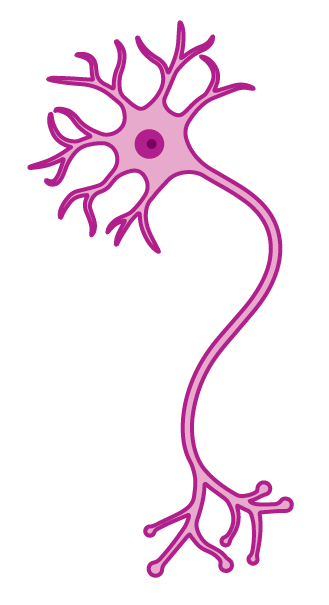 In this study, researchers from Belgium used a powerful lab tool called compartment-specific spatial transcriptomics to map exactly which genes are active in different parts of motor neurons in adult mice, comparing the cell body to the axon*. Specifically, they looked at neurons carrying a pathogenic variant in a known ALS gene called FUS‑**. They confirmed that FUS-variants disturb the normal set of RNAs found in axons and disrupt the local protein making process. One key protein affected is EIF5A, which is essential for efficient protein production and becomes impaired in neurons making the FUS variant due to a reduction in its active form.
The researchers then tested a compound called spermidine, which can restore the active form of EIF5A. When they applied spermidine specifically to axons, it improved protein production and reduced the harmful effects caused by FUS variants. They also tested spermidine in fruit fly models of ALS caused by variants in the FUS and TARDPB (TDP43), genes, showing reduced ALS-related toxicity there as well.
These results suggest that problems with local protein production in axons contribute to ALS, and that boosting this process, possibly with something like spermidine, could be a direction for future therapies.
**Pathogenic variants (mutations) in the FUS gene are a known risk factor for ALS and contribute to about 1.2 to 1.6% of all ALS cases.

 Dr. Janice Robertson (University of Toronto) and team
  Another study
 In
In 

 This review article by Dr. Andrea Parks (University of Toronto) looked at how age and life stage shape the experiences of people living with ALS, analyzing more than 40 studies published over the past decade. While many aspects of living with ALS differ by age, the authors found that important factors such as life transitions and age-related roles (like work or caregiving) are often overlooked, highlighting a need for more personalized, age-aware approaches to ALS care.