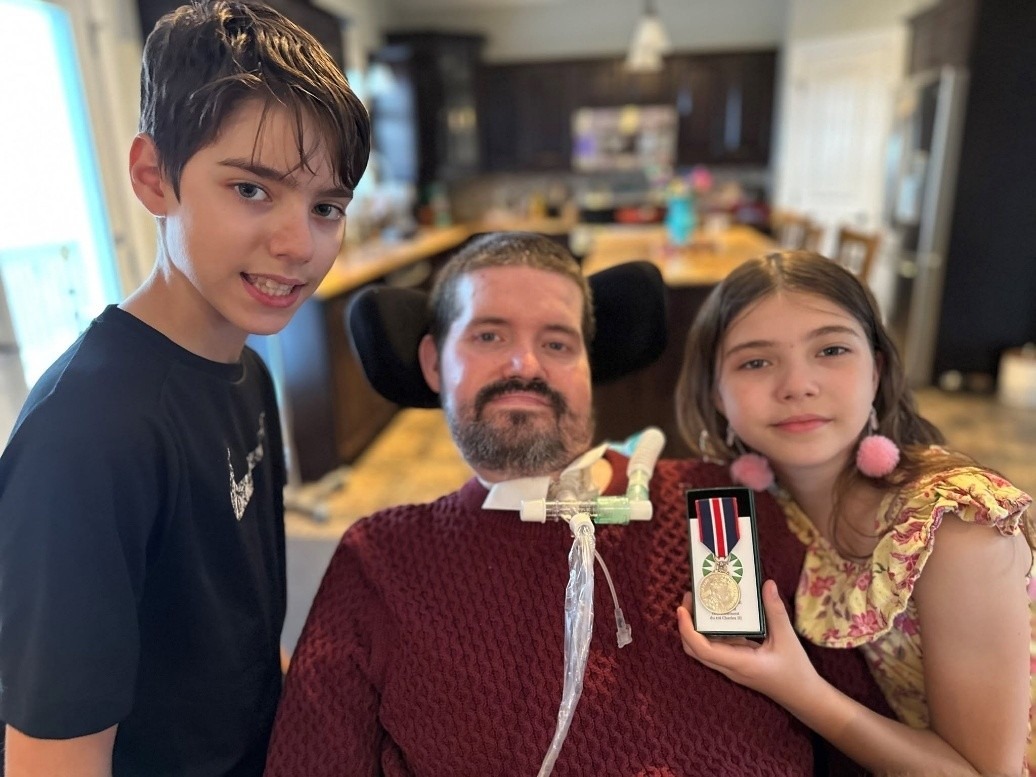
Decades of research have shown that military veterans seem to be more likely to develop ALS than the general population. Yet one of the biggest questions in the field remains unanswered: why?
I never imagined that after my military career, the biggest fight of my life would be against a disease we understand so little about.”
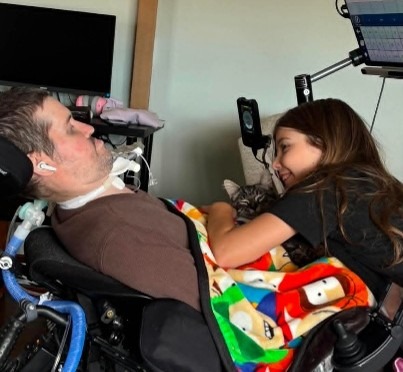
Bill Duff • veteran of the Royal Canadian Navy, who lived with ALS for more than a decade. Bill passed away from ALS in September 2026. We join his family, friends, and all those who knew him in remembering Bill, and his unwavering commitment to sharing his story and advancing ALS advocacy and research
For most people diagnosed with ALS without a known genetic component, there is no clear explanation for why the disease developed. Currently, many researchers believe ALS likely arises from a complex interaction between genetics, biology, and environmental factors. Understanding those risk factors is one of the biggest challenges in ALS research today.
For over two decades, one area that has received growing attention is the relationship between military service and ALS risk. Several studies from multiple countries have found that people who have served in the military appear to be diagnosed with ALS at higher rates than the general population. But while the association has been observed repeatedly, researchers still do not know exactly why it exists and many questions remain unanswered.
For Bill, this was about more than understanding a scientific association. It was about ensuring that veterans who have served their country, and those who will serve in the future, are not left without answers to a question that Canada has a responsibility to pursue.
So what have researchers learned so far, what remains uncertain, and what will it take to move the field forward?
A pattern researchers keep seeing
i
Understanding risk estimates
Researchers use measures such as relative risk (RR) and hazard ratios (HR) to compare how often a disease occurs in one group versus another, such as veterans compared with non-veterans. A value of 1 means there is no difference between the groups. Values above 1 indicate a higher risk, while values below 1 indicate a lower risk. For example, if researchers would normally expect 10 cases of ALS in a population but observe 15 cases, that represents a 50% higher risk (RR = 1.5). Throughout this article, these measures have been converted into percentages to make the findings easier to understand.
In 2003, researchers examined approximately 2.5 million U.S. military personnel who served during the Gulf War era. Veterans who had been deployed to the region were found to have nearly twice the risk (92% higher) of developing ALS compared to those who were not deployed. Increased risk was particularly evident among Army and Air Force personnel. The study was one of the first large-scale investigations to suggest a link between military service and ALS and sparked significant international interest in the topic. (Horner et al., 2003)
A second study focused on younger Gulf War veterans under age 45. Among approximately 690,000 Gulf War veterans, researchers confirmed 20 ALS cases, including 17 diagnosed before age 45, an age at which ALS is relatively uncommon. During the latter half of the study period, researchers found 127% more ALS cases than would have been expected based on population rates. By 1998, the number of observed cases was more than 200% higher than expected, suggesting a substantially greater occurrence of ALS among these veterans than in the general population. (Haley, 2003)
As researchers continued to investigate, evidence began to emerge that the association was not unique to the Gulf War. Studies involving veterans from other eras of military service, including World War II, Korea, Vietnam, and post-Vietnam service periods, have also reported elevated ALS risk (50% higher) compared to those who did not serve. This increased risk was relatively consistent across military branches, but about 70% higher among those who served in the Navy. These findings suggested that the association could not be explained by a single conflict, deployment, branch of service, or wartime exposure alone. (Weisskopf et al., 2005)
Similar findings have also been reported in multiple countries, suggesting the pattern is not unique to the U.S military. A Danish population-based study involving 3,650 people diagnosed with ALS found that military employees had a 30% higher rate of ALS than people without military employment. Longer military employment was also associated with increased odds of ALS. In France, a national study found that motor neuron disease incidence was 16% higher among male military personnel aged 50 and older than among men in the general population, but the researchers noted that smoking might partly contribute to the association.
Individual studies can sometimes produce conflicting results. That’s why researchers often conduct systematic reviews and meta-analyses, which combine data from many studies to look for broader patterns.
One such review, published in 2017, pooled data from 11 studies conducted across North America, Europe, and Japan, finding that veterans had a 29% higher risk of developing ALS than non-veterans. (Tai et al., 2017)
A 2026 study that examined more than 9 million U.S. veterans found that, compared with Army veterans, ALS rates were 29% higher among Air Force veterans, 26% higher among Coast Guard veterans, and 15% higher among Navy veterans. The study also found that officers had higher ALS rates than enlisted personnel. But in contrast, Marine Corps veterans had a 22% lower rate of ALS than Army veterans, and veterans with longer periods of military service also had lower ALS rates.
Differences between branches were most pronounced among younger male veterans and smaller among the oldest groups. Although the study included women, the smaller number of female veterans with ALS limited the conclusions researchers could draw about this population. (Weisskopf et al., 2026)
These findings differed from some earlier studies, illustrating how difficult it can be to pinpoint the specific factors responsible for the increased risk, and continued investment in this area is need.
In response to the substantial body of evidence, several government and military organizations have formally recognized this increased risk.
In Canada, Veterans Affairs recognizes this increased risk and provides coverage for veterans diagnosed with ALS. ALS Canada, alongside volunteer advocates and members of the ALS community, played an important role in advocating for improved disability benefits and support for veterans living with ALS.
In the United States, recognition has extended beyond benefits and support programs to substantial research investment. Evidence of a higher incidence of ALS among veterans led to the creation of the Amyotrophic Lateral Sclerosis Research Program within the U.S. Department of Defense. Since 2007, the program has invested more than US$300 million in ALS research aimed at better understanding the disease and developing new treatments.
It's important to remember that a higher risk does not mean that most veterans will develop ALS.
ALS remains a rare disease, and even a substantial increase in relative risk can correspond to a relatively small increase in the absolute number of cases. Overall, estimates suggest the lifetime risk of ALS in the general population is about 1 in 300, or approximately 0.3%. A 50% increase in risk, would only raise that lifetime risk to approximately 0.45%.
At the same time, these numbers represent more than statistics. Every additional ALS case means another person receiving a life-changing diagnosis, another family navigating uncertainty and loss, and another community affected by this devastating disease.
This human impact underscores why understanding these risks matters. While uncertainties remain about differences between military branches and the exact level of risk, the overall pattern is clear: military service has consistently been associated with a higher risk of ALS across numerous studies and populations.
But what do we actually know about this association?
Why are military service and ALS linked?
To answer that question, it is important to understand the difference between correlation and causation in research. A correlation means two things occur together more often than expected, while causation means one thing directly causes the other.
At this stage, research has identified a correlation between military service and ALS. However, researchers are still working to determine whether there is a causal relationship and, if so, which military-related exposures or experiences might be contributing to that increased risk.
This is challenging because environmental risk factor research often involves exposures that may occur decades before symptoms develop. Rather than studying people in a controlled environment, researchers must look backward and piece together thousands of individual experiences, medical histories, occupations, and exposures.
As a result, a wide range of factors need to be studied to begin to understand the increased risk observed among military personnel, including:
Intense physical exertion
Repeated physical injuries
Traumatic brain injury
Exposure to chemicals, solvents, fuels, or heavy metals
Deployment to different environments
Related lifestyle factors
Underlying genetics
These factors can be difficult to disentangle, making it challenging to determine whether the increased risk is related to military service itself. Researchers do not yet know whether a single factor plays a dominant role, if multiple factors work together, how they may interact with an individual’s genetic susceptibility to ALS, or if an entirely different explanation is involved.
This illustrates why environmental risk factor research is among the most challenging areas of science, and the explanation behind the association between military service and ALS is likely far more complex than a single cause. Researchers cannot rely on any one study alone, and findings must be replicated repeatedly and examined from multiple angles before strong conclusions can be drawn. At the moment, the available evidence is not sufficient to explain the association with confidence.
The implications for research, care, and ALS prevention
Recognizing the association is only the beginning, and understanding what drives it will require much more than counting ALS cases among veterans. Why are some veterans diagnosed with ALS while others are not? Which exposures, if any, increase risk? Can identifying these factors help prevent future cases?
Answering these fundamental questions will require continued investment in large-scale, long-term research.
Researchers need:
Large patient registries and databases that combine information about military service, medical history, ALS diagnosis, and disease progression across thousands of individuals, helping researchers identify patterns that can be further investigated.
Detailed information about military experiences, including injuries, deployments, occupational roles, training activities, and potential environmental exposures throughout a person’s service.
Studies that investigate specific environmental factors, rather than treating military service as a single risk factor.
Integrated biological and genetic data, including biomarkers, genetics, and other measures of underlying biology, to understand why the same exposures may affect some individuals differently than others.
By bringing these pieces together, we can begin to unravel which factors may contribute to ALS risk.
Importantly, understanding this connection could benefit everyone affected by ALS.
Because military service is one of the most consistently observed associations with ALS, studying this connection offers one of the most unique, strongest opportunity to investigate the factors that may trigger or accelerate the disease. Research into this area could help uncover why ALS affects some people but not others, how genetics and environmental exposures interact, and where opportunities may exist for earlier detection, prevention, or intervention.
These discoveries could provide some of the most important clues yet about ALS risk factors.
Canada already has a strong foundation for finding answers.
While answering these questions will require significant efforts, many of the necessary research foundations already exist. Canada has world-class researchers, leading ALS clinical expertise, national registries such as the Canadian Neuromuscular Disease Registry (CNDR), and large-scale studies such as Comprehensive Analysis Platform To Understand, Remedy and Eliminate ALS (CAPTURE ALS), that are collecting clinical, genetic, and biological data from people living with ALS across the country. Together, these resources provide a strong foundation for investigating potential military-related risk factors and further understanding ALS.
ALS Canada has helped build and support many of these efforts from the ground up, but philanthropy alone cannot answer questions of this magnitude. What is needed now is sustained investment from governments and research institutions to leverage these resources and pursue these questions at the scale they deserve. The recognition and investment already seen in the U.S. highlight both the importance of this area and the potential impact of pursuing it.
That is why ALS Canada continues to advocate for initiatives such as the Canadian Collaboration to Cure ALS, helping ensure Canadian researchers have the resources needed to investigate why ALS develops and how it can ultimately be prevented or treated.
“
Research is the only way ALS ever stops being the disease it is today.
“
Veterans deserve answers. People living with ALS deserve better treatments. Families deserve more time. Future generations deserve a world where ALS is no longer a devastating diagnosis. A $50 million investment in the Canadian Collaboration to Cure ALS is an investment in making that future possible.
In the end, the connection between military service and ALS remains one of the field’s most important unanswered environmental questions. Continued investment in research is one way we can carry forward the hope Bill shared: that one day fewer families will face the uncertainty of ALS, and more people will have the time and answers they deserve.
By investing in research that examines military service, environmental exposures, and ALS risk, we have an opportunity to better support Canadians veterans, deepen our understanding of ALS, and potentially uncover insights that benefit everyone.
Donations provide crucial services and information to people living with ALS and allow us to invest in research and advocacy dedicated to improving quality of life.
We use cookies and other technologies to understand how you use our site and to improve your experience and provide you with valuable content. By continuing on this website, you consent to the use of these cookies. For more information and to opt-out of cookies, visit the cookie section of our privacy policy.