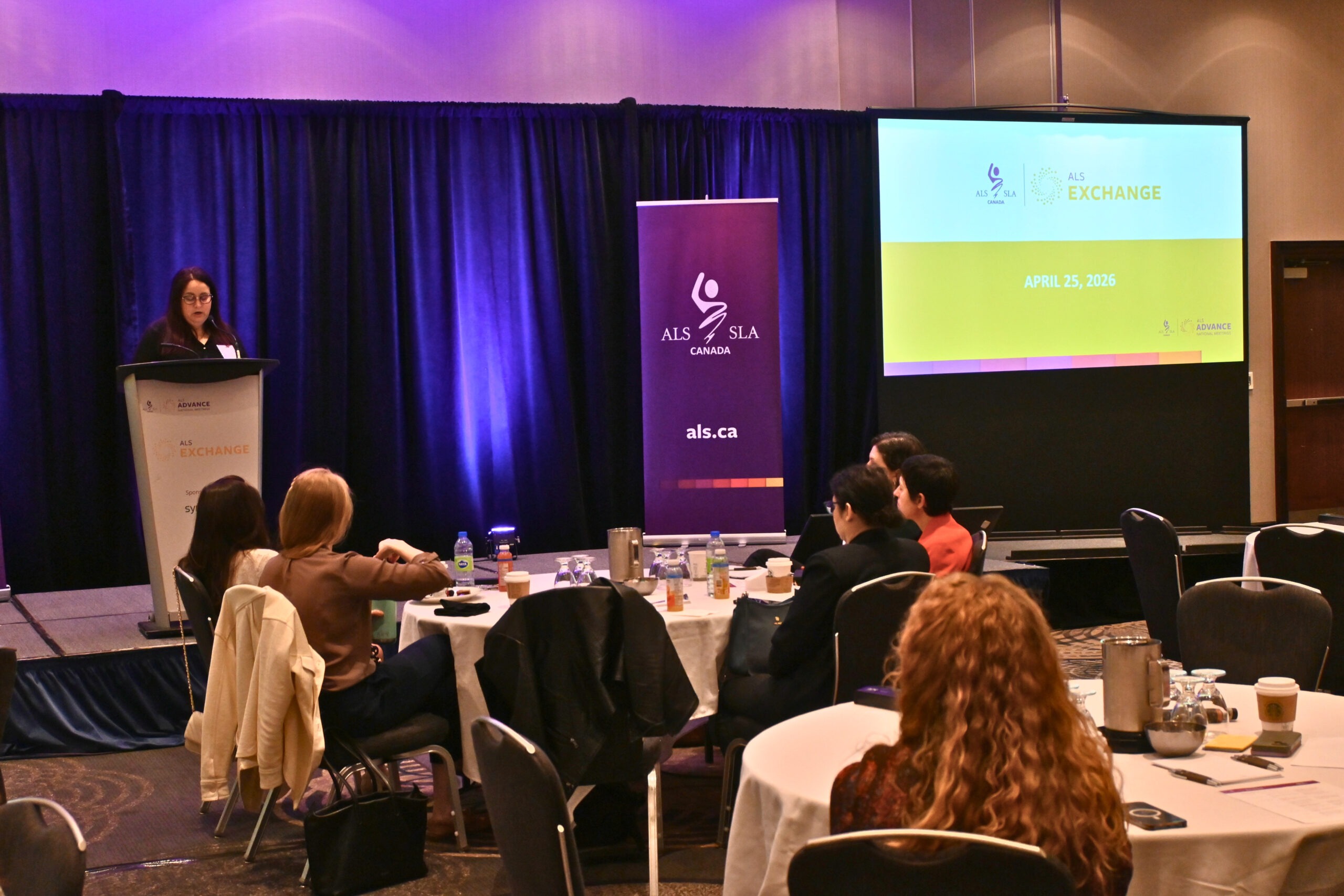
ALS Exchange brought together clinicians and allied health professionals to connect, share practical tools, and learn from each other. The goal was clear: make care more coordinated, responsive, and rooted in the realities of people living with ALS and their families. ALS Canada had the privilege to observe as conversations shifted from evidence and best practices to the everyday challenges providers face across settings and regions.
The event was intentionally designed for both learning and meaningful connection. Focused presentations kicked off the morning, followed by ample time for questions, discussion, and well-timed breaks that encouraged hallway conversations. Throughout the weekend, the tone was eager and collaborative.
Many attendees noted their ongoing engagement with ALS Canada events, describing them as consistently practical, engaging, and welcoming. Kim Barry, Vice-President, Community Services reflected on the event: “Bringing clinicians and allied health professionals together from across Canada for a day of learning, networking, and exchanging ideas was both meaningful and transformative. In a field that can feel isolating, this space fostered connection, shared insights, and strengthened our collective commitment to improving ALS care.”
Several attendees had travelled across Canada, bringing diverse perspectives that emerged in their questions and examples (what works well in one setting, what’s harder in another, and what clinicians need to do to bring care closer to people where they live).
Practicality ran through the entire agenda. Attendees sought approaches they could use right away: clearer ways to recognise and respond to ALS and FTD overlap, confident language for adults discussing ALS with children, and a shared understanding of how genetics shape family care conversations. This enabled fluid, open exchanges, fostering reflection and learning that attendees could carry back to their communities. The closing workshop reinforced a whole-person approach, treating communication and human connection as core clinical skills.
- Common language helps teams work together: Sessions highlighted the value of sharing frameworks, especially when supporting complex cognitive and behavioural changes and aligning care across disciplines. “What a great opportunity for knowledge sharing, learning, and networking,” shared a participant. “Will be able to use the information learned to improve quality of care for our ALS clients and their families.”
- Family-centred care needs practical scripts and tools: Engagement peaked when discussions moved from concepts to “what do I say next?” in real family conversations.
- Communication is part of care: The movement-based workshop illustrated how presence, pacing, and connection can shape clinical encounters.
ALS Canada will build upon these learning opportunities with internal teams and continue connecting with clinicians and allied health providers working to strengthen care in their communities. Through our on-going partnership with the Canadian ALS Research Network (CALS), we will continue to work toward supporting care across the whole country, ensuring that knowledge and best practices reach people affected by ALS wherever they are.
If you’re interested in future learning and engagement opportunities, watch for upcoming virtual opportunities at: Webinars and Education – ALS Society of Canada.
Thank you to presenters, facilitators, our sponsors, and every attendee who contributed questions, reflections, and on-the-ground insight. Your willingness to share what works and where more support is needed helps strengthen care for people living with ALS and their families.
If you’d like to know more about genetics, access the Gene Hub or email genetics@als.ca